J Is For Just Like That!
Author: utbt15 Dec 2014
Its been a long time since I blogged anything about the children. This post is made possible by the baby turning my husband in to an old man by entering her double digits! May the child make him older and us happier every year!
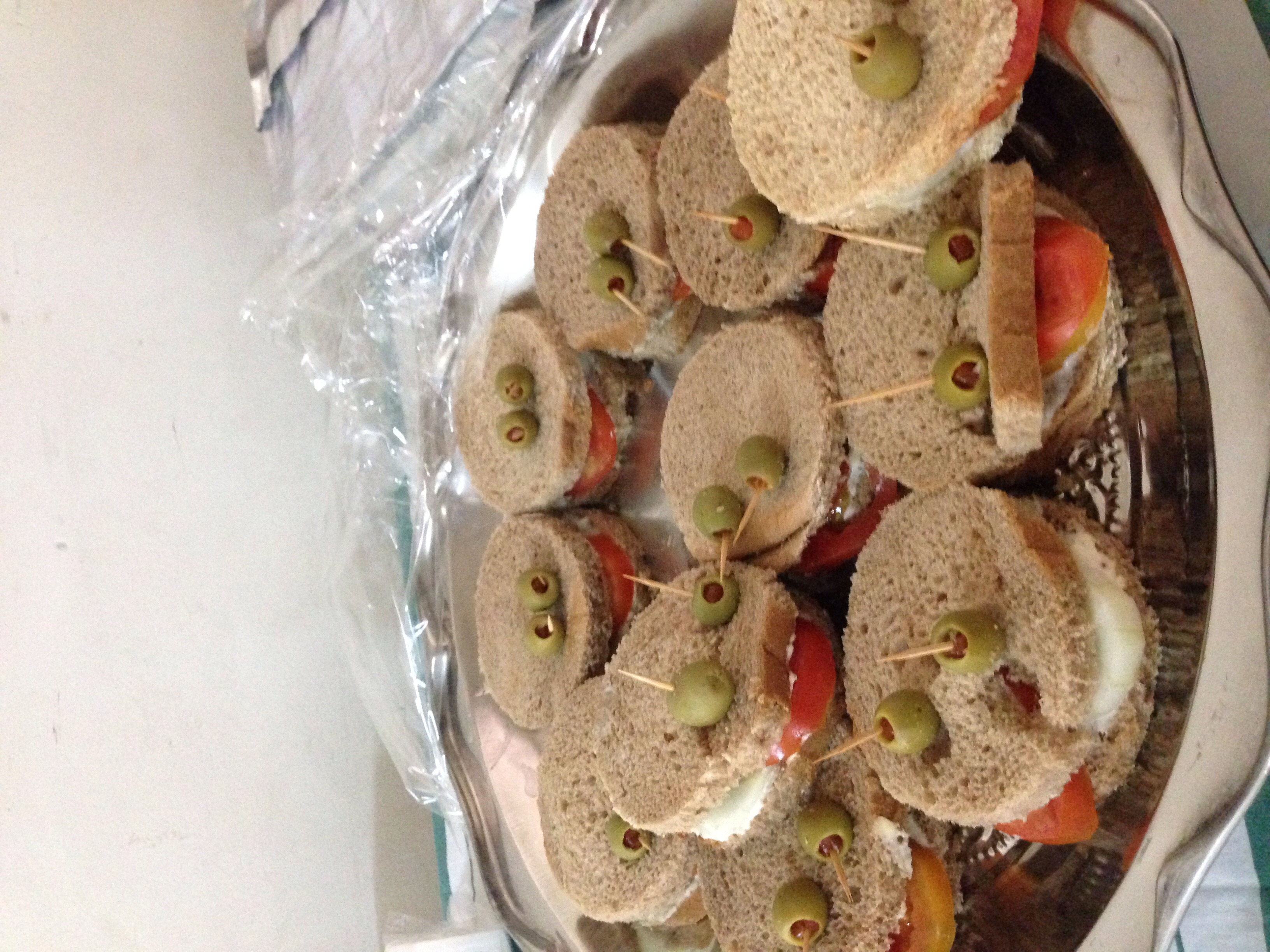
She chose a monster theme birthday party because, ‘Amma, I am not a child anymore. I am grown up and ready for more scary things now.’ (Gulp!) May she not encounter anything like that. EVER.
She chose Evolution of Calpurnia Tate, a volley ball and two bottles of nail polish as her birthday gifts. May she be a reader for life and find happiness in simple things.
She asked for green slime drink, monster sandwiches, scary apple mouths, monstrous baked spaghetti and cheese. I could make only two the way she wanted. I made regular spaghetti with cheese sauce. I skipped the slime drink. She said, ‘Its okay Amma. Lets buy a mixed berry juice. It will look like blood. And the pasta is spot-on in taste. So thanks.’ May you always be blessed with the ability to let go of small disappointments and look at the bigger picture.
May the universe make all your positive thoughts come true and give you the wisdom to recognize this blessing, dear child.
 |
 |
W Is For Want To Read
Author: utbt27 Nov 2014
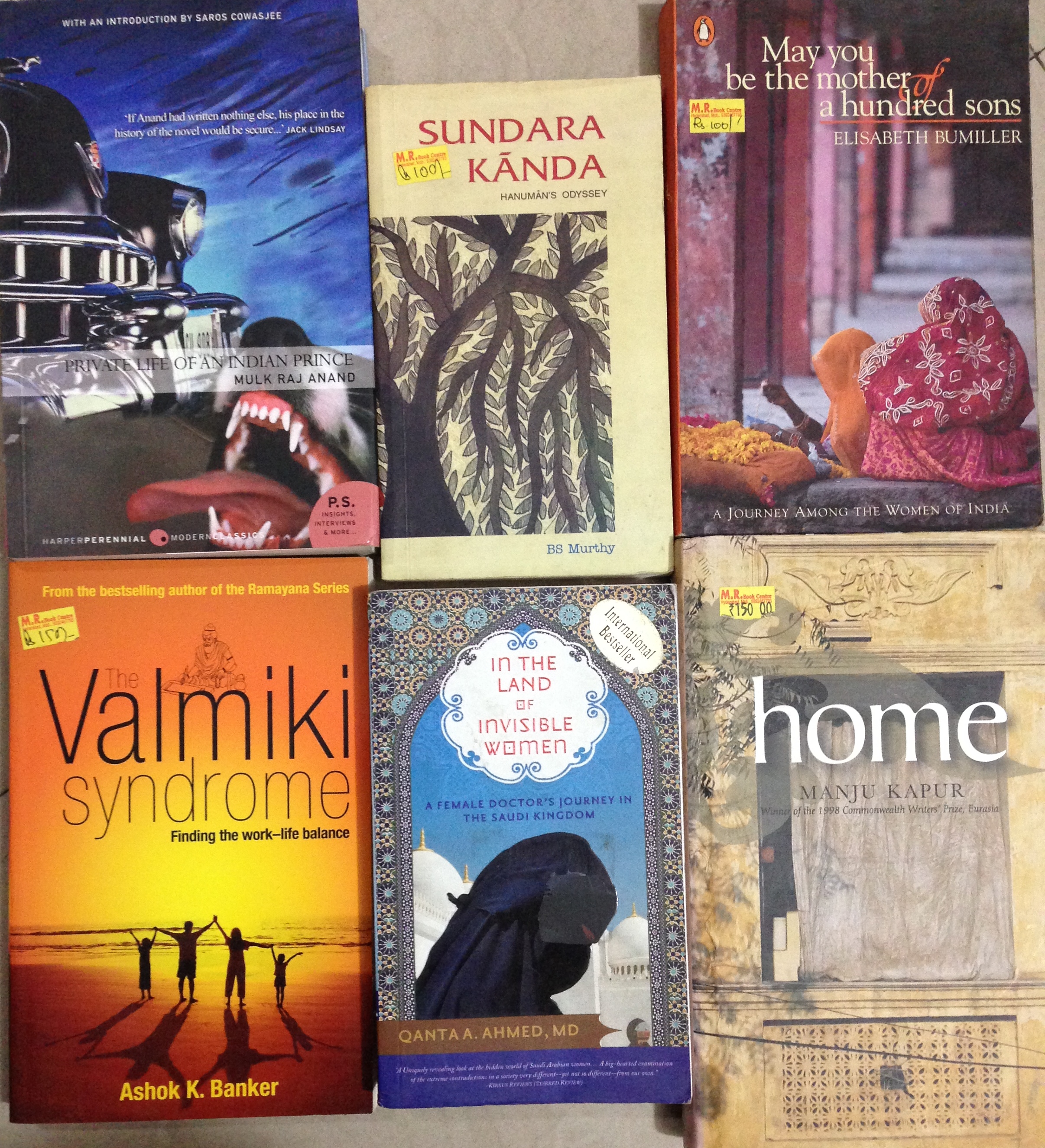
Sighted @ Walden/M.R.
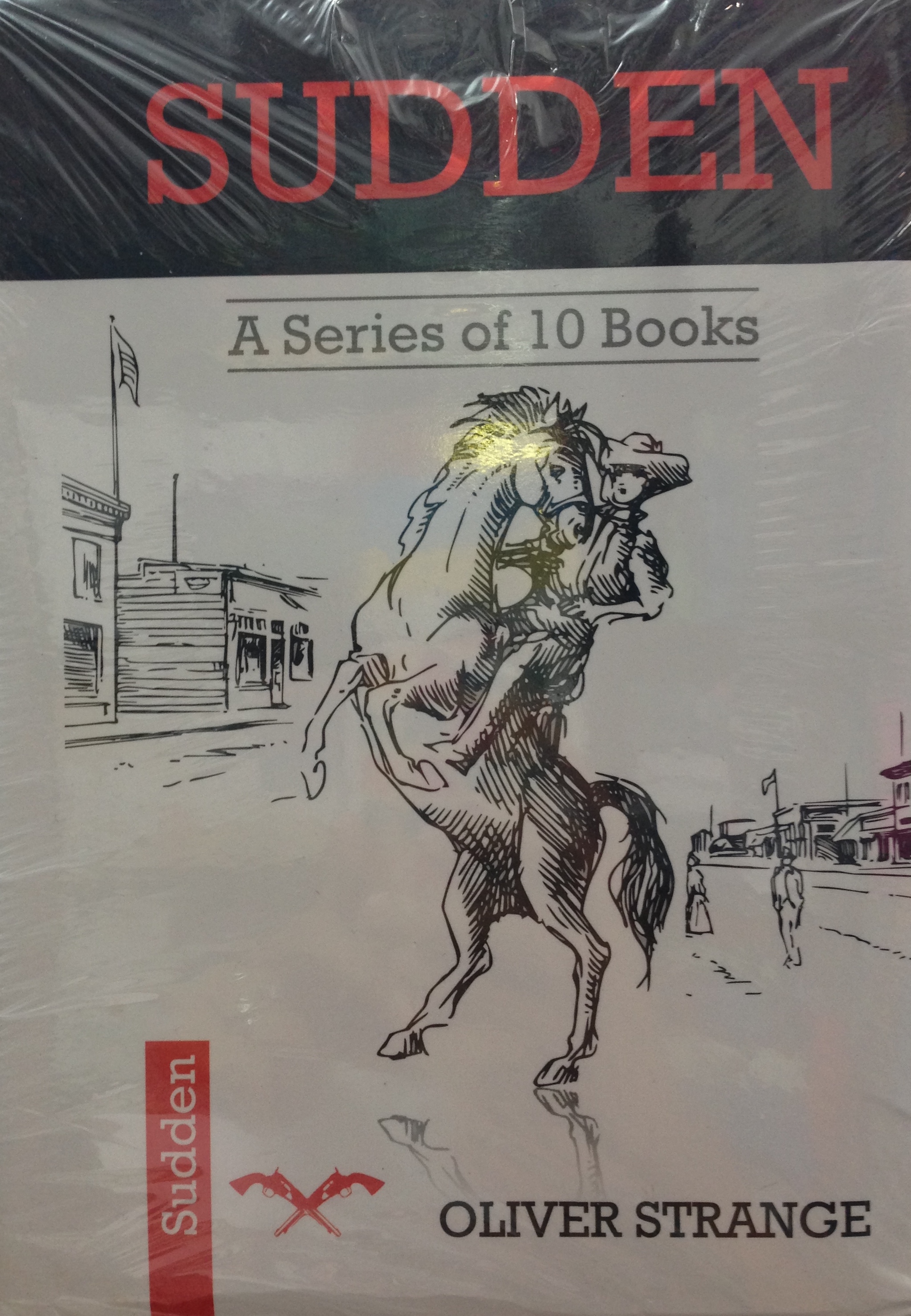
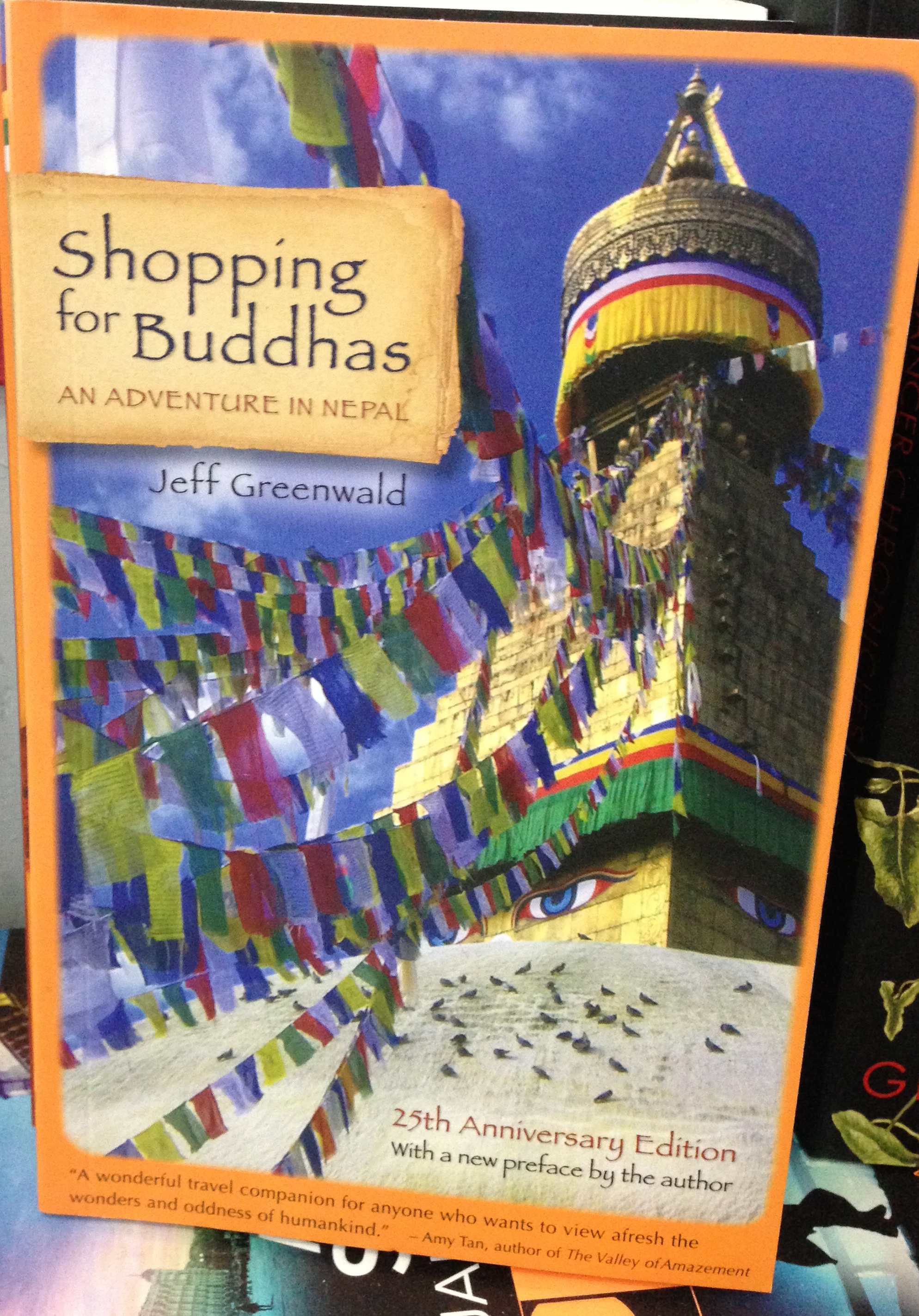
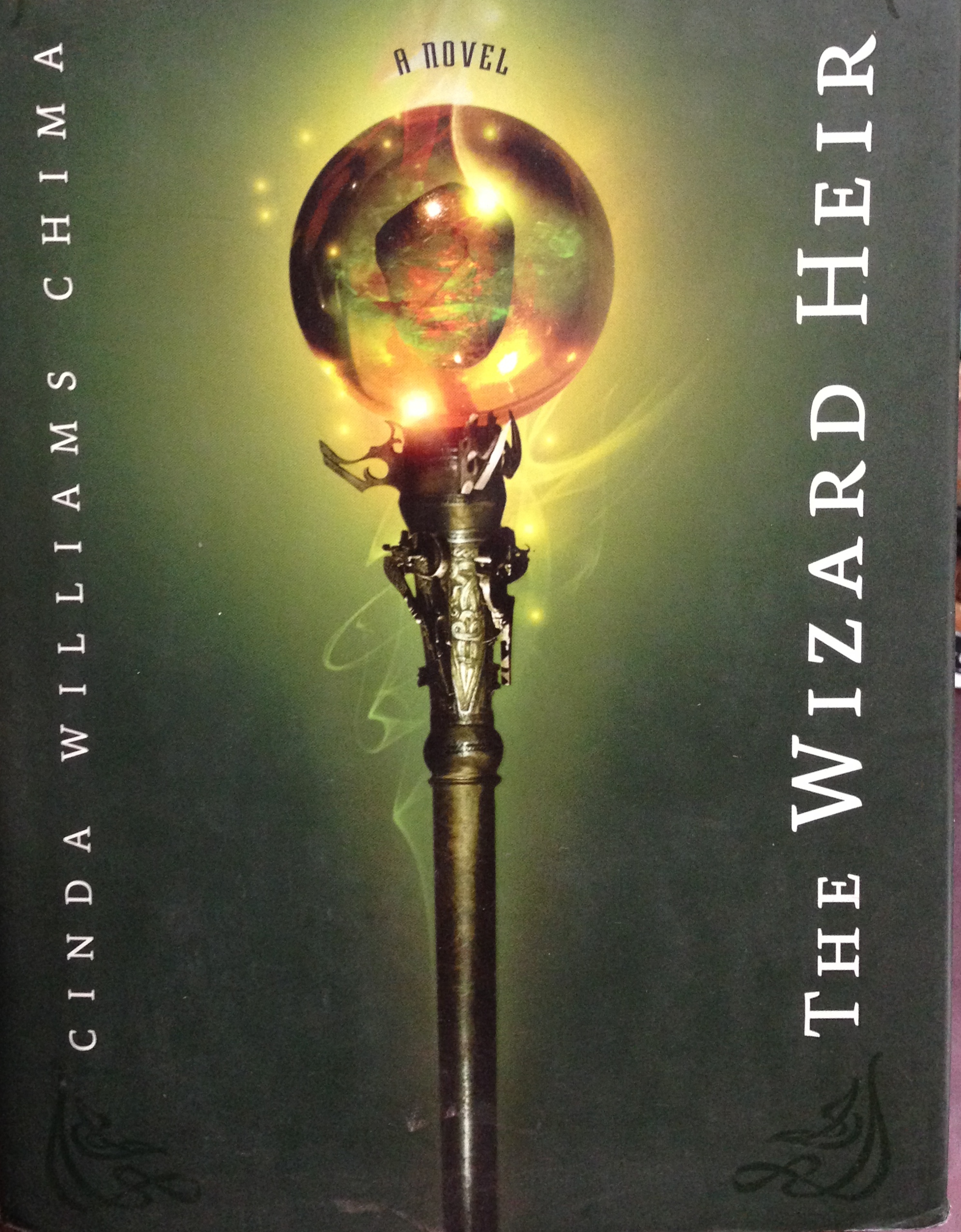
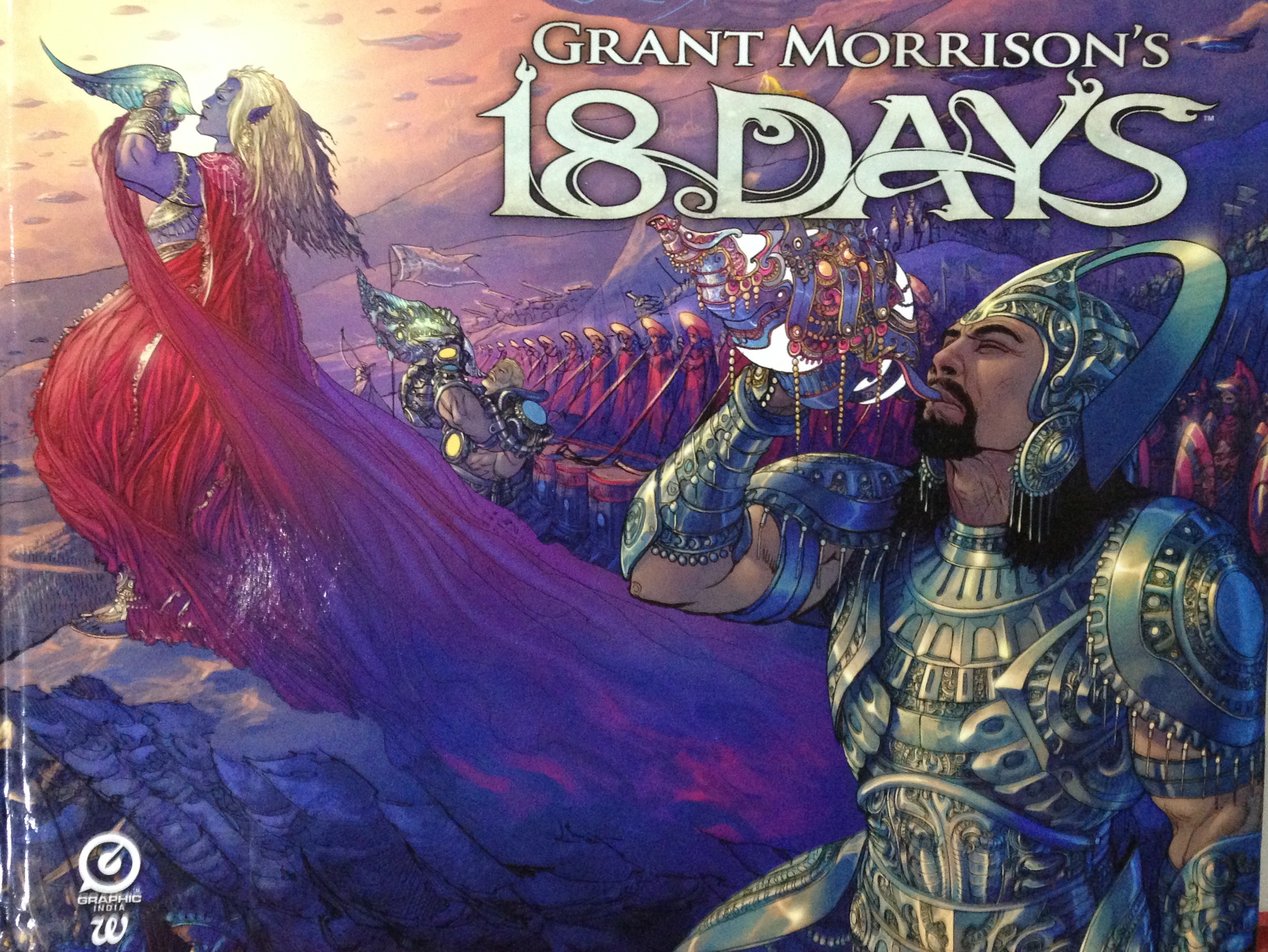
Grant Morrison’s 18 days intrigued me. It was priced at few thousands, so just browsed it and left. The images had a whole Star Trek, Klingon feel to it. But it looked like a behind the scenes collection of an attempt to animate the Kuru war, not a story. So probably a coffee table book for an animation enthusiast.
Any guess on what was bought and what wasn’t?
 |
 |
 |
 |
 |
 |
 |
 |
 |
 |
 |
 |
J Is For Just Like That
Author: utbt27 Nov 2014
A wise friend posted this elsewhere. I would like to post it in this space so it is easy to pull up when I need it. (I have highlighted what I like to keep reminding myself about.)
Go placidly amid the noise and haste, and remember what peace there may be in silence. As far as possible without surrender be on good terms with all persons.
Speak your truth quietly and clearly; and listen to others, even the dull and the ignorant; they too have their story.
Avoid loud and aggressive persons, they are vexations to the spirit. If you compare yourself with others, you may become vain and bitter; for always there will be greater and lesser persons than yourself.
Enjoy your achievements as well as your plans. Keep interested in your own career, however humble; it is a real possession in the changing fortunes of time.
Exercise caution in your business affairs; for the world is full of trickery. But let this not blind you to what virtue there is; many persons strive for high ideals; and everywhere life is full of heroism.
Be yourself. Especially, do not feign affection. Neither be cynical about love; for in the face of all aridity and disenchantment it is as perennial as the grass.
Take kindly the counsel of the years, gracefully surrendering the things of youth.
Nurture strength of spirit to shield you in sudden misfortune. But do not distress yourself with dark imaginings. Many fears are born of fatigue and loneliness.
Beyond a wholesome discipline, be gentle with yourself. You are a child of the universe, no less than the trees and the stars; you have a right to be here. And whether or not it is clear to you, no doubt the universe is unfolding as it should.
Therefore be at peace with God, whatever you conceive Him to be, and whatever your labors and aspirations, in the noisy confusion of life keep peace with your soul. With all its sham, drudgery, and broken dreams, it is still a beautiful world. Be cheerful. Strive to be happy.
11 reasons to read THE MINOR ADJUSTMENT BEAUTY SALON
Author: utbt26 Nov 2014

By Alexander McCall Smith. Book#14 in the series: No1 Ladies Detective Agency
Age: 15+
(1)The book not just passes the Bechdel test, but excels in the test!
(2)It has the wise and loving Mma Ramotswe in it.
(3) All books in the #1 ladies detective agency make happy bubbles in your soul.
(4)As you read the book, idyllic images of people sitting on a front porch, under a brilliant blue sky, sipping tea and making pleasant conversation floats in your mind. And that is a image you would want to hold on to. And who knows? It might get you through some difficult days.
(5) Mma is the kind of person who says gently but with conviction, “Mechanics can cook. Ladies can fix cars. It’s different these days Rra. Men can do things. Women can do things. There is no more work that is reserved just for one sort of person. Not any more.”
(6)She is gentle on herself too. This is not to be confused with low self esteem or not believing in herself.
(7) And the wonderful Mr.J.L.B.Matekoni does not believe in stereotypes. He would say with conviction, ‘That’s nonsense, Charlie. Women drivers are more careful than men. Men wreck their cars more often than some do, I’m afraid.’
(8) When Mma makes a list of things that she is grateful to have in her life, it would include not just her immediate family and work, but would extend to her employees, their family and her country.
(9)She understands a mother never forgets a child she had lost.
(10)As you are reading, certain snippets of wisdom hits you, ‘She had forgiven him, yes, but she still did not like to remember. And perhaps a deliberate act of forgetting went along with forgiveness. You forgave, and then you said to yourself: Now I shall forget. Because if you did not forget, then your forgiveness will be tested, perhaps many times and in ways you could not resist, and you might go back to anger, and to hating.’
(11)You start highlighting and bookmarking sections and you finally you see that you have liked every other line!
PS: This I found interesting.
Family Tree
Author: utbt11 Sep 2014
We did family tree in our house today and it went like this…..
Child#1: Amma who is Amithab Bachan?
Me: He is an actor. He has acted in many Hindi movies.
Child#1: How do you spell his name?
Me: A.M.I.T.H.A.B B.A.C.H.A.N
Child#1: I thought A.B.H.I.S.H.A.B B.A.C.H.A.N because she(child#2) says something like that.
Child#2: No. I say A.B.H.I.S.H.E.K B.A.C.H.A.N.
Me: Abishek Bachan is Amithab Bachan’s son. He acts in movies too.
Child#2: Noooooo. That is a boy in my bus. His name is Abhishek, but every one calls him Abhishek Bachan.
Me: Errrrrrr, that’s because they are likening him to the movie star Abhishek and probably teasing him.
<Child#1, Child#2: Still trying to figure out the joke in this>
Me: Ok, you will know this. Abishek Bachan is married to Aishawarya Rai. Amithab Bachan is Aishwarya’s father-in-law.
Child#1, Child#2: Oh! So the Bachans are some one famous then?!!!
Jinx
Author: utbt11 Sep 2014
(Image credit: Goodreads)
Title: jinx
Author: Sage Blackwood
Age: 9+
Well…. this is a story of an orphaned boy, Jinx, adopted by a magician. Jinx has special powers that are quite unique and can’t be explained. For instance he can talk to trees. He can read minds.
The villain an evil magician who sucks people’s soul and bottles it up to increase his power. One fine day the benevolent magician performs magic ‘on’ the boy and bottles a part of him. The boy believes that his benefactor is evil and tries to retrieve what he has lost. A boy and girl join him on this journey.
The quest of a boy wonder, his friends – one girl, one boy. And the girl is quite intelligent. The other boy is uh…..meh. Jinx is an orphan. And the benevolent magician sends Jinx on a quest without giving him the complete information. At a point Jinx thinks he is dead but hovers in the in between space and chooses to live. Does any one see similarities?
Jinx -2, well, thanks, no thanks.
Battle Hymn Of The Tiger Mother
Author: utbt24 Aug 2014
Ok, here is the thing……….. there is no battle, except in the author’s head. And such a single minded, my way or highway, head it is. The first part starts off okay, then as the fanaticism hits the roof is when you end up reading it with eyebrows raised and eyes wide.
I find the book hilarious though, not the bits where she says,
You can’t play extraordinarily well unless you’re relaxed……..“Imagine that you’re a rag doll”, Mr.Shugart would tell Lulu. “Floppy and relaxed, and not a care in the world. You’re so relaxed your arm feels heavy from its own weight…….Let gravity do all the work….Good, Lulu, good.”
“RELAX!” I screamed at home. “Mr.Shugart said RAG DOLL!”
But the parenting gems is what I found hilarious.
“That’s one difference between a dog and a daughter, I thought to myself later. A dog can do something every dog can do – dog paddle, for example – and we applaud with pride and joy. Imagine how much easier it would be if we could do the same with daughters! But we can’t; that would be negligence.“
And I am not the weak hearted. I am the kind that tells my children stuff like, “Can you please use your brain? That is what it is for.”, “What is for dinner? Food, food is for dinner. You eat what is served, no questions asked.” Other children coming to my house ask my daughters, “Why is your mother so strict?” and my daughters sigh and answer, “Yes, she is. I already told you no?” And I find this Chinese parenting extreme. May it is just Chua parenting and not Chinese parenting.
I am so reading sections about music practice to the children. So the next time I ask them to do their 10 min daily practice, they get perspective.
The Rosie Project
Author: utbt24 Aug 2014

As an Apple fan, I have never been impressed by Gates. I know it is extremely one sided, but I am what I am. So when I saw this book title pop as ‘Gates recommends‘ with his commentary, “It’s a funny and profound book about being comfortable with who you are and what you’re good at. I’m sending copies to several friends and hope to re-read it later this year. It is one of the most enjoyable novels I’ve read in a long time.”, I had to pick it up. It was my most objective way of getting to know Gates.
Rosie Project turned out to be hilarious and un-put-downable. It is my Rs.300 well spent! For some reason, John Oliver was my Don Tillman. What is yours? And I am quite liking Gates’ taste in books:)
Princess Academy By Shannon Hale
Author: utbt24 Aug 2014

PRINCESS ACADEMY
By
SHANNON HALE
Age 12+
Tags: Princess, Coming Of Age
Additional reads: Palace Of Stone(Princess Academy#2)
Born on a Mount Eskel, in a family of miners, Miri is named after the Miri stone her family has quarried for generations. Small for her age, ordered by her father not to step in to the quarry, Miri feels hardly anything like the stone she is named after. Everything changes when the royal priest announces that the future bride of the prince will have to be from the forgotten highlands of Mount Eskel. Miri, along with other young girls of Eskel, is forced to leave their families to train to become a future princess.
Things go bad for Miri from day one as she challenges tutor Olana’s rules inadvertently. On a particularly bad day Olana locks Miri in a dark closet without food, Miri discovers that she can communicate to the other girls through the Miri stone. At first Miri is puzzled, but later she figures out that the stone has been an integral part of the highlanders for generations and the stone now flows through their veins, thus making it possible for Miri to initiate communication.
One particularly early and harsh winter storm, the girls get snowed in and are attacked by thugs looking for a royal ransom in exchange for the future princess. How Miri leads her friends to escape from the bandits is the rest of the story.
It’s a typical Chak De India story with a nice twist at the end that smoothly sets the scene for a sequel. There are lots of small details that are worth a mention. Like how one of the girls has a limp arm, she is never ridiculed by the tutor, her friends or the royal seamstresses preparing the girls for the ball. Also how the girls are not treated as delicate darlings, but are expected to split wood, do hard chores, learn to curtsey as well as the basics of politics. The story flows well, but for the initial few pages where Hale tries explaining Miri’s her special powers.
As I read the book, I made notes on the section where the girls put to use the basics of diplomacy they are taught. I was clearing some stuff and the notes actually prompted me to write this post. Yes, I make notes like a maniac on everything I read, we all have our peculiarities don’t we?!
-Clearly state the problem.
-Admit your own error.
-State the error of the other party.
-Propose a specific compromise.
-Invite mutual acceptance.
-Illustrate negative outcome of refusal and positive effects of acceptance.
-Assert a deadline for acceptance.
Nice-no?!
All in all a sensitive and a sensible story
Blood Secret By Kathryn Lasky
Author: utbt21 Aug 2014

BLOOD SECRET
By
KATHRYN LASKY
Age 12+
Tags: Spanish Inquisition, Persecution of Jews.
Additional reads: Horses of the Dawn By Kathryn Lasky , Isabel: Jewel of Castilla, Spain 1466 (The Royal Diaries)
8 year old Jerry is abandoned by her mother at a campground and the trauma mutes Jerry. No amount of prompting or probing can make her talk. It is not like Jerry has lost her words, she can think of appropriate responses, but words refuse to come out of her mouth. Pronounced as a ‘selective mute’ Jerry stays in multiple Catholic Charities, but after 6 years the Catholic Charities decide that Jerry’s mother is dead and sends Jerry to live with her great-grandaunt Costanza in New Mexico. In Costanza’s basement, Jerry discovers a chest that contains the family’s bloody secret. A chest that helps Jerry overcome her selective mutism.
Jerry finds a mish-mash of objects in the trunk and for some reason when Jerry picks up an object, the history of the object and the life of its owner plays out in front of Jerry’s eyes. Thus, we, as readers, learn about the turbulent times and the tragedy Miriam(Seville, Spain, 1391), Beatriz(Toledo, Spain, 1449),
Luis(Seville, Spain, 1480), Esther(Granada, Spain, 1492), Zayana(Yucatan Penunsula, New Spain, 1540), Zayana(New Mexico, 1590), Jeraldine(New Mexico, 1912) go through during the times of Spanish Inquisition.
As the book ends, Jerry has over come her selective mutism, but we still do not have answers to what happened to Jerry’s mother and why the chest talks only to Jerry. But the purpose of Jerry is probably to show us, the readers, glimpses of the atrocities of the inquisition. Jerry is just a medium to tell us the story that spans 500 years and her story is not central in the bigger scheme of things.
Any good book leaves the reader with a lot of questions, so does Blood Secret.
It is puzzling why Jews are always a persecuted sect all over the world. Spanning over 2500 years, more than 10 million Jews have been killed. If you are anguished about the madness that killed 6 million Jews during Holocaust, you will be shattered to read how methodically the madness had been propagated over centuries and across continents during the times of inquisition!
What is it about religion? I fail to understand both sides, one side that is forces their faith over the rest of the world and would kill for it and the other side that would value their faith over their lives. Zayana the Aztec was a character that I identified with. When forced to baptize her daughter in order to be allowed to continue her baking business, she comes up with the most practical of solutions,
“And I believe in doing business, bread business, and if they want to call God Jesus Christ and I want to call him Quetzecoatl, well, that’s another kind of business altogether – private business.”
Needless to say she is strong and is survivor. She manages to outlive her daughter and grand daughter.
To me, my faith is something I grew up with. Its part of my memory and the reason I find comfort in it is because I am familiar with my faith. But having been converted for 5 generations and having lost their religious practices, what motivates people like Estrella and Carlos to risk everything, most importantly their children and practice the lost religion of their ancestors?
It is sad that faith, something that is supposed to give humanity hope to live, strength to carry on, can be so lethal.


Recent Comments